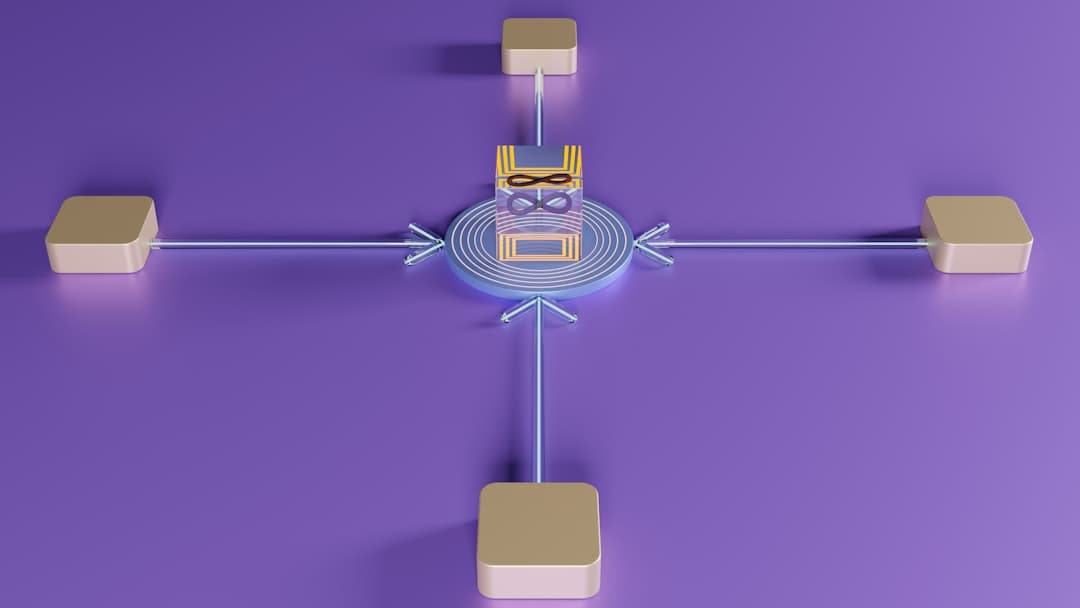
Mastering Microservices for Modern Web Development
Unlock the power of microservices! This comprehensive guide to understanding microservices architecture for web development covers design, benefits, challenges, and best practices.
We earn commissions when you shop through the links below.
Mastering Microservices for Modern Web Development
Hey fellow developers!
In today's fast-paced digital world, building robust, scalable, and resilient web applications is paramount. The monolithic approach, once the standard, often struggles to keep up with the demands of continuous delivery, ever-growing user bases, and diverse technology stacks. This is where microservices enter the picture, offering a paradigm shift in how we design and develop our applications. If you're looking to elevate your web development game and tackle complex projects with agility, then truly understanding microservices architecture for web development is a skill you'll want to add to your arsenal. Join me as we dive deep into this architectural style, exploring its core principles, benefits, challenges, and practical implementation.
What are Microservices? A Paradigm Shift in Application Design
At its heart, a microservices architecture is a distinctive method of developing software applications as a suite of small, independent services, each running in its own process and communicating with lightweight mechanisms, often an HTTP resource API. Unlike a traditional monolithic application where all components are tightly coupled and run as a single unit, microservices break down an application into smaller, manageable, and independently deployable services.
Monoliths vs. Microservices: The Core Difference
Monolithic Application: A single, indivisible unit containing all business logic, data access, and user interface components. Think of it as a single building with all rooms interconnected, sharing one foundation and one power supply. While simple to start, scaling specific parts or introducing new technologies can become a nightmare.
Microservices Application: A collection of loosely coupled services, each responsible for a specific business capability. Imagine a city made of many small, independent buildings, each serving a distinct purpose. They can be built, maintained, and even demolished independently, yet they all contribute to the city's overall function.
This fundamental difference has profound implications for how teams work, how applications scale, and how quickly new features can be delivered. The shift from a monolith to microservices isn't just about technology; it's about organizational structure and development philosophy too.
Working with Microservices for Modern Web in real projects — practical implementation insights
Why Consider Microservices for Web Development? The Driving Benefits
The allure of microservices isn't just hype; it's driven by tangible benefits that address many pain points of traditional web development.
1. Enhanced Scalability and Flexibility
With a microservices architecture, you can scale individual services independently based on their load. If your 'User Management' service sees high traffic, you can spin up more instances of just that service, leaving others untouched. This is far more efficient than scaling an entire monolith, which might only need one specific component scaled.
2. Improved Resilience and Fault Isolation
If one microservice fails, it doesn't necessarily bring down the entire application. Because services are isolated, a failure in the 'Recommendation Engine' might only impact recommendations, while users can still browse products and complete purchases. This fault isolation significantly improves the overall stability of your web application.
3. Independent Deployments and Faster Release Cycles
Each microservice can be developed, tested, and deployed independently. This means teams can push updates to their specific services without coordinating with other teams or risking breaking the entire application. This accelerates release cycles, allowing for continuous delivery and rapid iteration.
Teams can choose the best technology stack for each service. One service might be written in Node.js for real-time capabilities, another in Python for machine learning tasks, and a third in Java for robust enterprise logic. Similarly, different services can use different databases (e.g., PostgreSQL for relational data, MongoDB for document storage, Redis for caching). This flexibility allows developers to leverage the strengths of various tools.
5. Smaller, Autonomous Teams
Microservices naturally align with small, cross-functional teams, each responsible for one or a few services. This fosters autonomy, reduces communication overhead, and allows teams to move faster and own their domain end-to-end.
Core Components of a Microservices Architecture
Implementing microservices effectively requires understanding the various architectural components that support this distributed style.
1. Services (Bounded Contexts)
These are the individual, self-contained units of your application, each encapsulating a specific business capability (e.g., 'Order Service', 'Product Catalog Service', 'Payment Gateway Service'). The concept of 'Bounded Contexts' from Domain-Driven Design (DDD) is crucial here, defining clear boundaries around each service's domain model.
2. API Gateway
The API Gateway acts as a single entry point for clients (web browsers, mobile apps) to interact with the microservices. It handles request routing, composition, protocol translation, authentication, and authorization. Instead of clients calling individual services directly, they call the API Gateway, which then fans out requests to the appropriate backend services. This is a critical component for managing complexity and security at the edge of your microservices system. For instance, managing user authentication can be centralized here, simplifying how services get user context. If you're interested in how modern authentication works, check out my guide on Implement Authentication in Next.js 13 App Router with Ease, as many of these principles apply to API Gateways too.
3. Service Discovery
In a dynamic microservices environment, services are constantly being created, destroyed, or moved. Service discovery allows services to find and communicate with each other without hardcoding network locations. Common patterns include client-side discovery (e.g., Eureka, Consul) or server-side discovery (e.g., Kubernetes, AWS ALB).
4. Inter-service Communication
Services need to communicate to fulfill complex requests. Common communication patterns include:
Synchronous Communication: RESTful APIs (HTTP/JSON), gRPC. This is often used when an immediate response is required. Many microservices expose REST APIs, similar to how one might Create Custom WordPress REST API Endpoints Tutorial, but for a specific service's domain.
Asynchronous Communication: Message queues (e.g., RabbitMQ, Apache Kafka, AWS SQS). This is ideal for scenarios where services don't need an immediate response or for broadcasting events.
5. Data Management
Each microservice typically manages its own database, ensuring loose coupling and data autonomy. This often leads to 'eventual consistency' across the system, where data might not be immediately consistent across all services but will eventually synchronize.
6. Monitoring and Logging
Given the distributed nature of microservices, centralized logging (e.g., ELK Stack, Splunk) and monitoring (e.g., Prometheus, Grafana, Datadog) are essential for understanding system health, debugging issues, and tracking performance.
7. Containerization & Orchestration
Technologies like Docker and Kubernetes have become almost synonymous with microservices. Docker containers package services with their dependencies, ensuring consistency across environments. Kubernetes orchestrates these containers, managing deployment, scaling, and operational aspects.
Designing Your Microservices: Best Practices for Success
Successfully adopting microservices architecture for web development goes beyond just breaking things apart; it requires careful design considerations.
1. Domain-Driven Design (DDD)
Use DDD principles to identify 'Bounded Contexts' which define the natural boundaries of your services. Each service should be cohesive and responsible for a single business domain.
2. Single Responsibility Principle (SRP)
Each service should have one, and only one, reason to change. This keeps services small, focused, and easier to maintain.
3. Build for Failure (Resilience)
Assume services will fail. Implement mechanisms like circuit breakers, retries, fallbacks, and bulkheads to prevent cascading failures and ensure graceful degradation.
4. Centralized Observability
Invest in robust logging, monitoring, and tracing (e.g., OpenTelemetry, Jaeger) from day one. Understanding the flow of requests across multiple services is crucial for debugging and performance tuning.
5. Automated Testing and CI/CD
Automate testing at all levels (unit, integration, end-to-end) and establish a strong Continuous Integration/Continuous Deployment (CI/CD) pipeline for each service. This enables rapid and safe deployments.
6. Security by Design
Security must be woven into the fabric of your microservices. This includes securing inter-service communication (e.g., mTLS), implementing robust authentication and authorization mechanisms (JWT, OAuth2), and regularly scanning for vulnerabilities. As discussed earlier, an API Gateway can handle initial authentication, but services must also validate incoming requests.
A Practical Code Snippet: Conceptual API Gateway Routing
To illustrate how an API Gateway might route requests, let's look at a simplified, conceptual example using pseudo-code. This isn't a runnable example but demonstrates the logic you'd find in a routing configuration or actual gateway implementation.
// Conceptual API Gateway Configuration (e.g., using a framework like Ocelot, Spring Cloud Gateway, or Nginx)

const gatewayConfig = {
  routes: [
    {
      path: '/api/products/*',
      method: ['GET', 'POST', 'PUT', 'DELETE'],
      targetService: 'product-catalog-service',
      authenticationRequired: true,
      rateLimit: { requests: 100, per: 'minute' }
    },
    {
      path: '/api/users/register',
      method: 'POST',
      targetService: 'user-management-service',
      authenticationRequired: false // Allow new user registration without prior auth
    },
    {
      path: '/api/orders/*',
      method: ['GET', 'POST', 'PUT', 'DELETE'],
      targetService: 'order-processing-service',
      authenticationRequired: true
    },
    {
      path: '/api/frontend-assets/*',
      method: 'GET',
      targetService: 'static-asset-service',
      authenticationRequired: false,
      cachePolicy: 'public, max-age=3600'
    }
  ],
  // ... other global settings like logging, error handling, etc.
};

// --- How a request might be processed (simplified logic) ---

function processIncomingRequest(request) {
  const matchingRoute = gatewayConfig.routes.find(route => {
    // Simple path matching for demonstration
    const pathPattern = route.path.replace('*', '.*'); // Convert glob to regex
    return new RegExp(`^${pathPattern}$`).test(request.path) &&
           route.method.includes(request.method);
  });

  if (!matchingRoute) {
    return { status: 404, body: 'Not Found' };
  }

  if (matchingRoute.authenticationRequired && !request.isAuthenticated) {
    return { status: 401, body: 'Unauthorized' };
  }

  // Apply other policies (rate limiting, caching)

  // Forward request to target service
  console.log(`Routing request to ${matchingRoute.targetService} for path ${request.path}`);
  // In a real system, this would involve network calls, retries, etc.
  return forwardToService(matchingRoute.targetService, request);
}

// Example usage (conceptual)
const clientRequest = { path: '/api/products/123', method: 'GET', isAuthenticated: true };
// processIncomingRequest(clientRequest);
This snippet demonstrates how an API Gateway acts as a traffic cop, examining incoming requests and directing them to the correct backend service based on defined rules. It also shows how the gateway can apply cross-cutting concerns like authentication and rate limiting before the request even reaches the service.
Challenges and Considerations for Microservices
While the benefits are compelling, it's crucial to acknowledge the complexities involved in understanding microservices architecture for web development and implementing it effectively.
1. Increased Operational Complexity
Managing a distributed system with dozens or hundreds of services is inherently more complex than managing a single monolith. Deployment, monitoring, logging, and debugging become significant challenges, requiring robust tooling and expertise.
2. Data Consistency Across Services
Maintaining data consistency across multiple independent databases requires careful design, often leveraging event-driven architectures and eventual consistency patterns. This is a fundamental shift from ACID transactions common in monolithic databases.
3. Inter-service Communication Overhead
Network latency, serialization/deserialization costs, and the overhead of managing communication protocols can impact performance. Careful design of APIs and communication patterns is vital.
4. Distributed Transactions
Implementing transactions that span multiple services (e.g., placing an order that involves inventory, payment, and shipping services) is complex and often requires patterns like Sagas.
5. Testing a Distributed System
Testing individual services is easier, but end-to-end testing of a system composed of many interconnected services becomes more challenging. Integration and contract testing become particularly important.
When to Choose Microservices (and When Not To)
Microservices are not a silver bullet. They are an excellent solution for specific problems, but they introduce their own set of complexities.
Choose Microservices When:
You're building a large, complex application that will evolve over time.
Your application requires high scalability and resilience, with independent scaling of different components.
You have multiple autonomous teams that can work independently on different parts of the system.
You need the flexibility to use diverse technologies for different parts of your application.
Your organization has the operational maturity to manage distributed systems (DevOps expertise).
Consider a Monolith (or a Modular Monolith) When:
You're starting a new, small project with an unclear domain.
You have a small team or limited budget.
Rapid initial development is the top priority, and scaling concerns are minimal for the foreseeable future.
The operational overhead of microservices outweighs the benefits for your specific use case.
Implementing Microservices: A Phased Approach
If you decide microservices are right for your project, a gradual, phased approach is often best.
1. Start Small, Identify Bounded Contexts
Don't try to microservice-ize everything at once. Begin by identifying one or two clear, independent business domains that can be extracted into services. For example, a 'User Profile' service or a 'Notification' service are often good candidates.
2. The Strangler Fig Pattern for Existing Systems
For existing monolithic applications, the 'Strangler Fig' pattern is invaluable. Gradually replace specific functionalities of the monolith with new microservices, routing traffic to the new services while the old functionality is slowly 'strangled' (removed).
3. Embrace Containerization and Orchestration
Docker for packaging and Kubernetes for deployment and management are almost essential tools for managing microservices at scale. They provide the necessary infrastructure to handle the distributed nature of the architecture. If you are building modern client applications that interact with these services, frameworks like React, which can be easily set up with Vite and TypeScript, as explored in my post Setting Up React Project with Vite and TypeScript: A Modern Guide, become critical for consuming data from these services.
4. Prioritize Observability
As mentioned, invest in robust monitoring, logging, and tracing from the beginning. You can't manage what you can't see.
Conclusion: Embracing the Future of Web Application Development
Understanding microservices architecture for web development is no longer just a buzzword; it's a critical skill set for any developer aiming to build modern, scalable, and resilient web applications. While they introduce complexity, the benefits in terms of flexibility, independent scaling, faster deployments, and team autonomy can be transformative for the right projects.
My hope is that this deep dive has demystified microservices and provided you with a solid foundation for evaluating and potentially adopting this powerful architectural style. Remember, it's a journey, not a destination. Start small, learn from your experiences, and continuously iterate.
Ready to take the plunge? Begin by identifying a small, independent feature in your next project that could benefit from being a standalone service. Experiment with a simple API Gateway and see how you can manage communication between services. The world of distributed systems is challenging but incredibly rewarding!